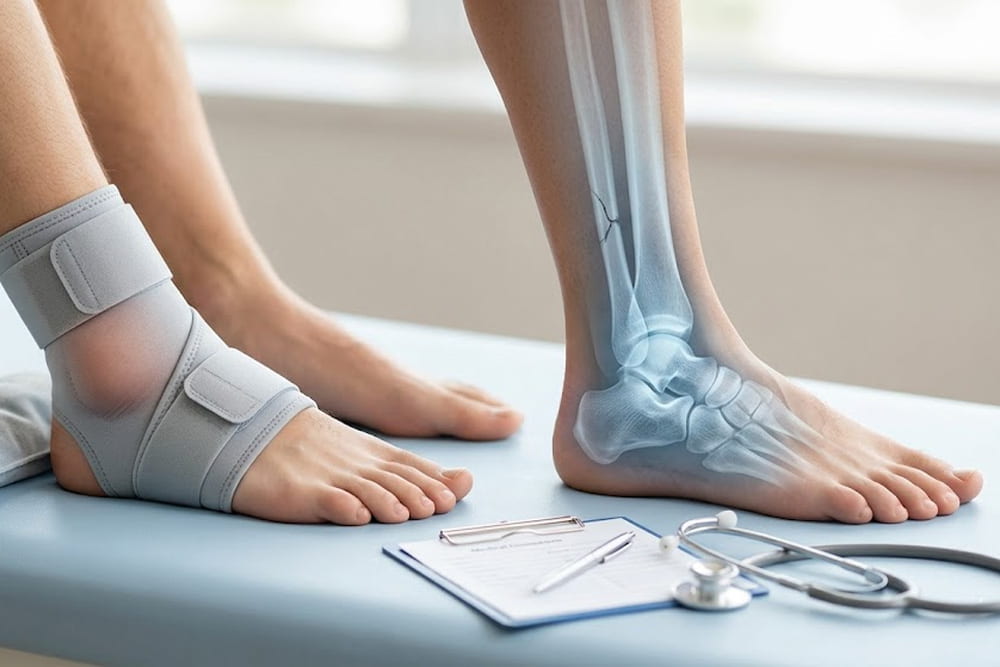
A rolled ankle is one of the most common injuries in everyday life — a missed step on a curb, an awkward landing during a pickup game, a slip on uneven ground. Most of the time it’s a sprain that heals with rest. Sometimes it’s actually a fracture, and the two can be surprisingly hard to tell apart in the first hours after injury. Knowing the difference — or knowing when you can’t tell — protects against long-term problems.
What’s Actually Happening Inside the Ankle
A sprain is an injury to one or more of the ligaments that stabilize the ankle joint. Ligaments stretch or tear depending on severity, ranging from grade 1 mild stretching to grade 3 complete tear. A fracture is a break in one of the bones of the ankle — most commonly the fibula on the outside, but sometimes the tibia or talus.
Both injuries cause pain, swelling, and bruising. Both make weight-bearing difficult. From the outside, in the first day or two, the symptoms can look almost identical.
Clues That Point Toward a Sprain
Sprains tend to involve pain on the soft tissue around the ankle — particularly along the ligaments below the lateral malleolus, the bony bump on the outside of the ankle. Swelling and bruising develop, but most patients can hobble or partially bear weight within a few hours, especially in milder grades.
Pain typically improves with elevation and rest within forty-eight hours, and there’s usually no specific point of bony tenderness when the doctor presses on the bones themselves.
Clues That Point Toward a Fracture
Several signs raise the concern for fracture rather than sprain. Inability to bear any weight in the moments after injury — even four steps — is a recognized red flag. Pain directly over the bone rather than the soft tissue around it, particularly on the back edge of the medial or lateral malleolus, is another.
A popping or snapping sound at the moment of injury, visible deformity, numbness in the foot, or rapidly developing significant swelling and bruising all warrant prompt imaging. So does pain that worsens rather than improves over the first day.
The Ottawa Ankle Rules
Emergency departments use a simple decision tool called the Ottawa Ankle Rules to decide who needs an X-ray. The criteria include inability to bear weight at the time of injury and four steps later, plus bony tenderness in specific locations. Patients meeting any of these criteria need imaging — patients who don’t usually don’t.
You can apply a simplified version yourself: if you can walk on it without sharp pain over the bone, it’s probably a sprain. If you can’t walk on it or the bone itself hurts when pressed, get it imaged.
What Treatment Looks Like
Sprains are usually treated with the RICE protocol — rest, ice, compression, elevation — followed by progressive rehabilitation as pain allows. More severe sprains benefit from a brief period of bracing and supervised physical therapy to restore strength and proprioception, which prevents the chronic instability that haunts many under-treated ankle injuries.
Fractures depend on which bone, where, and whether the bone fragments have shifted out of alignment. Stable, non-displaced fractures often heal in a walking boot. Displaced or unstable fractures may require surgical fixation with plates and screws to restore proper joint alignment.
When to See a Specialist
Any suspected fracture should be evaluated promptly. Sprains that aren’t improving after two weeks, or any ankle injury that leaves you with persistent instability or recurrent rolling, deserve a specialist look. An experienced ankle surgeon in Boise can review your imaging, assess joint stability, and recommend the rehabilitation or intervention that gets you back to full function — not just back to walking.
Get the Diagnosis Right Once
The biggest preventable problem with ankle injuries is incomplete recovery — patients return to activity before the joint is truly ready, end up with chronic instability, and re-injure repeatedly. Investing in a proper diagnosis and rehabilitation plan up front pays dividends for years.
Did you find this article helpful? Check out the rest of our blog!
Read Also
- Where to Find Reliable Mental Health Support for Teens
 Have you noticed changes in your teen’s mood, sleep, or behavior that leave you worried? Growing up can bring stress from school, friends, family, and new demands. Some teens may struggle to share their feelings or ask for help, even when they need support. Finding the right mental health support for teens can help them… Read more: Where to Find Reliable Mental Health Support for Teens
 - Top Trends Shaping the Future of Mental Health CareMental health care is moving fast to meet daily human needs. People want direct care that fits modern life. Clinics respond by creating flexible options that make healing easier to reach. Providers look past rigid habits to give people solid care. From smart tools to body wellness, these changes help people find relief when life… Read more: Top Trends Shaping the Future of Mental Health Care
- Full-Arch Dental Tourism: Why UK Patients With Severe Bone Loss Are Looking AbroadDental implants have become one of the fastest-growing segments of private dentistry. Within that market, one patient group behaves very differently from the rest: people who have been told they do not have enough upper jawbone for conventional implants. For these patients, the choice is rarely between one clinic and another. It is between a… Read more: Full-Arch Dental Tourism: Why UK Patients With Severe Bone Loss Are Looking Abroad
- Levels of Mental Health Care and When to Seek SupportMental health care can range from occasional outpatient appointments to 24-hour hospital treatment. The appropriate level depends on safety, symptom severity, daily functioning, medical needs, available support, treatment history and personal preferences. A licensed clinician should assess these factors rather than relying on a symptom list alone. Need help now? In the United States, call… Read more: Levels of Mental Health Care and When to Seek Support
- How to Choose a Shilajit Brand Based on the ResearchIn a randomized trial published in the Journal of the International Society of Sports Nutrition in 2019, 63 active men took 250 mg of standardized shilajit, 500 mg, or a placebo every day for eight weeks, and the benefit for strength retention after a fatiguing workout appeared only at 500 mg. For anyone choosing a… Read more: How to Choose a Shilajit Brand Based on the Research
- How to Incorporate Relaxation into Your Busy ScheduleFinding balance when you have a packed daily agenda often feels out of reach. Between work duties, family obligations, and personal projects, personal rest usually gets pushed to the bottom of the list. Small, intentional shifts in daily habits can help restore calm without requiring hours of extra free time. Continue reading to discover everything… Read more: How to Incorporate Relaxation into Your Busy Schedule
- Red Light Therapy for Skin and Wellness: Meet Vital Red Light TherapyModern wellness is not always about complicated treatments or long routines. Many people are now looking for simple, convenient ways to support their skin, recovery, and overall wellness at home. One technology getting more attention is red light therapy. Red light therapy uses specific wavelengths of red and near-infrared light to support the body’s natural… Read more: Red Light Therapy for Skin and Wellness: Meet Vital Red Light Therapy
- Managing Shock Loss After a Hair Transplant: The Financial and Clinical Imperative of Post-Op CareIn the rapidly evolving landscape of private healthcare, executive leadership within cosmetic and restorative surgery clinics faces a dual challenge: maintaining strict clinical standards while maximizing patient lifetime value (LTV) and brand advocacy. As the global medical tourism and elective procedure markets expand, clinical outcome quality alone is no longer the sole differentiator for premium… Read more: Managing Shock Loss After a Hair Transplant: The Financial and Clinical Imperative of Post-Op Care